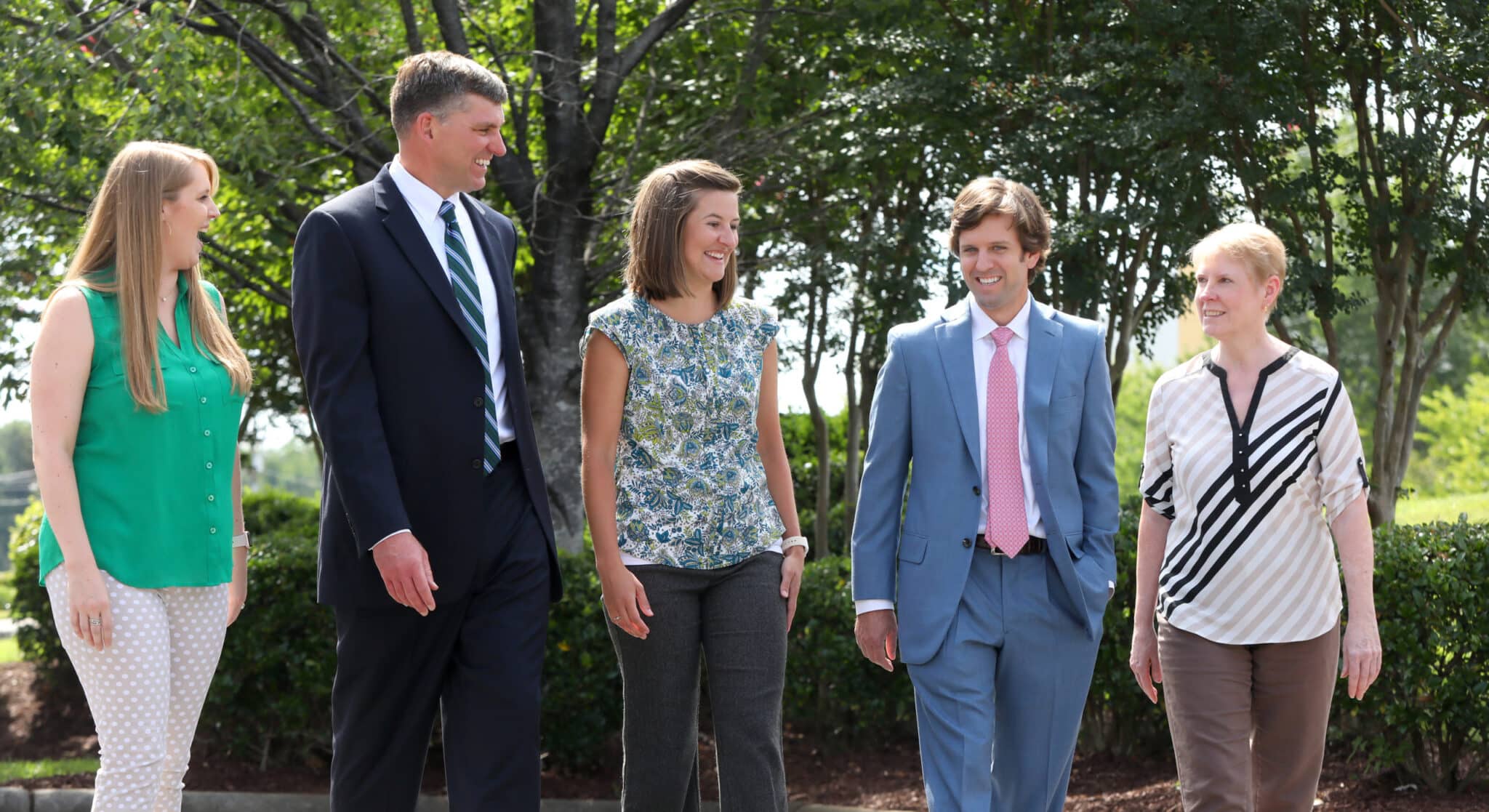
While striving to provide the highest quality legal services possible, our experienced North Carolina and South Carolina attorneys will present you with affordable solutions and personal care to protect your loved ones.
Attorneys Peter J. Nosal and Thomas C. Jeter III first met as classmates at the University of South Carolina School of Law. After working separately for other Charlotte area law firms, they both shared a vision to own their own business and founded the law firm of Nosal & Jeter, LLP in 2011. Nosal & Jeter, LLP is a full-service law firm serving clients and accepting cases in all areas of estate planning, business law, injuries and wrongful death, criminal defense, real estate, trust and estate litigation, and probate administration in both North Carolina and South Carolina state and federal courts. Our firm was founded on the belief that lawyers should be pragmatic and flexible when dealing with a client’s unique situation.
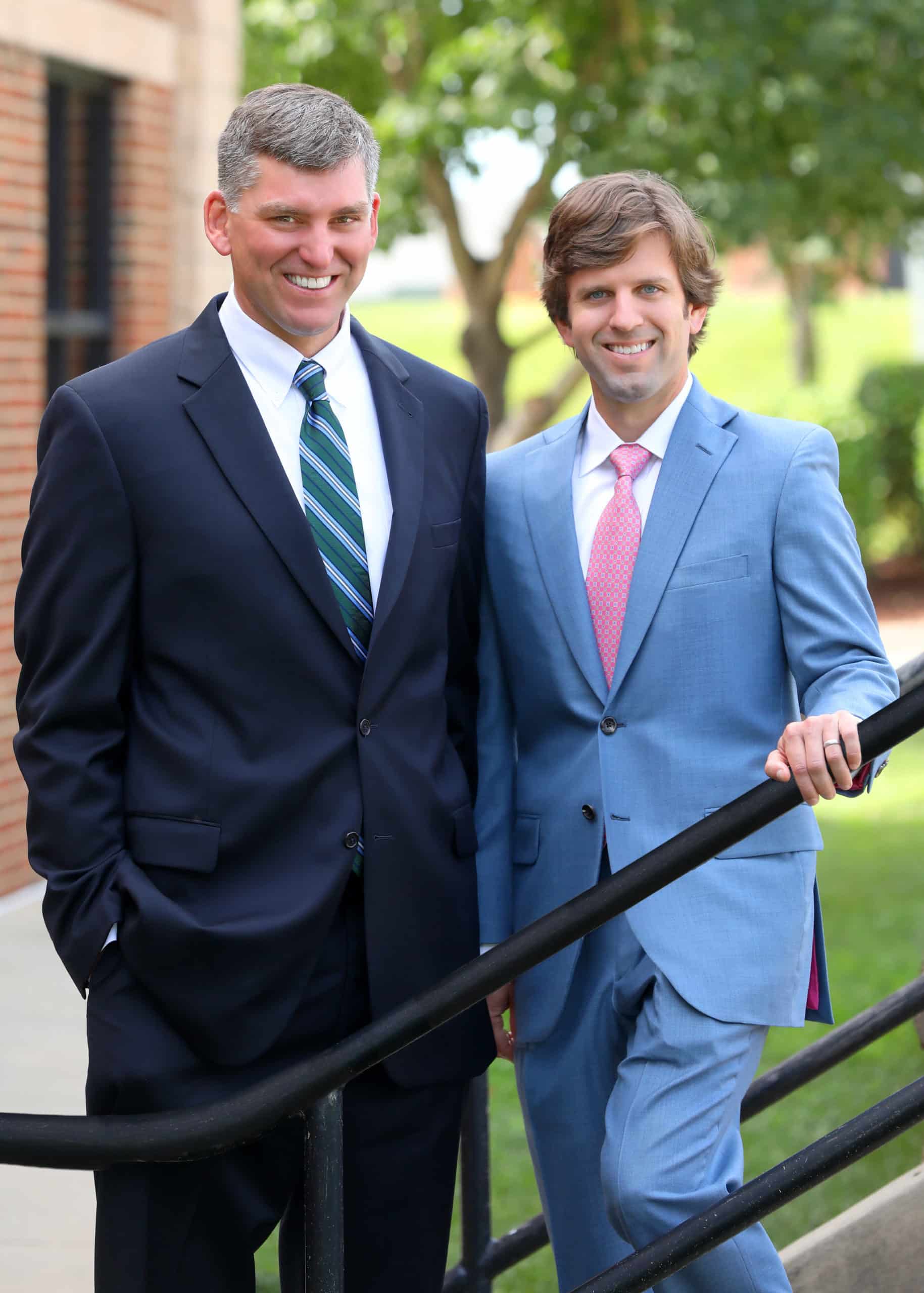
Our firm provides comprehensive legal services to our clients and our lawyers handle a wide variety of cases in both business and personal practice areas. We take pride in our reputation for success and being a trusted advisor that clients can rely on when a legal issue arises. How can we help you?
Bon Temps Real Estate provides attorney-led guidance for land, timber, commercial, and estate or trust property sales across Fort Mill, York County, and surrounding communities. With attorney and broker Pete Nosal overseeing each transaction, clients benefit from legal insight in areas where traditional agents often struggle, especially probate-related sales, title issues, and complex land deals.

From multi-million-dollar timber tracts to inherited residential property, Pete blends real-estate experience with probate and land-management knowledge to keep deals moving and reduce client liability. The brokerage integrates seamlessly with active legal services, allowing issues to be resolved quickly and ensuring properties are ready for market without delay.
Attorney Peter J. Nosal is highly sought after to represent defendants charged in cases ranging from speeding tickets to drunk driving (DUI) in South Carolina criminal courts. Attorney Thomas C. Jeter III understands the complexities of estate planning involving property in multiple states and routinely handle ancillary probate for out-of-state decedents. Likewise, Attorney John Dowtin deals with Corporate Formations along with Residential & Commercial Real Estate.
Our practice areas include Business law, wills and trusts, probate and trust administration, and traffic ticket and
DUI defense. See our Full list of service areas.
Yes, all of the information on our website is backed by scientific research and is regularly reviewed and updated by experts in the field.
852 Gold Hill Rd., Ste 201
Fort Mill, SC 29708
We are located in the Gold Hill Commerce Park on the side closer to Gold Hill Road. If you need directions, please
call 803-351-3597
18525 Statesville Rd., Ste D-02
Cornelius, NC 28031
We are located in the Park 21 Business Park in the corner office of the second row of office buildings. If you need directions, please call 803-351-3597.
For new clients, we offer a free initial consultation for estate planning services, including setting up a wills, trusts and powers of attorney.
Since every client has different goals and wishes for how to pass on their legacy and different types and levels of assets to consider, we do not have a one size fits all approach to estate planning. At the initial consultation, an experienced Estate planning attorney will provide an affordable and transparent quote for our legal services, typically as a flat fee. No Will is too simple or estate too large for our firm to handle.
We typically advise reviewing your Last Will and Testament and any other Estate Planning documents every 3-5 years to make sure it still meets your needs. Most of the time, nothing will need to be changed. Of course, if you have had specific changes to your wishes, you can update your documents at any time. Additionally, the death of a family member or fiduciary named in your documents (such as your Executor of your Will, Trustee of your Trust, or Agent of your Power of Attorney) could facilitate the need to update your documents.
Yes. Our attorneys do offer fiduciary services to our clients to serve as an Executor or Trustee. Sometimes your estate planning attorney is the best person to make sure your wishes are carried through. However, we discuss all available options for naming an executor or trustee with our clients, including family, friends, banks, and trust companies, and do not push this service on any clients who are not interested or would not be a good fit.
You should review your estate plan every 3–5 years or after major life changes (marriage, divorce, children, relocation, significant asset changes).
A trust can help avoid probate, provide privacy, and streamline asset management, while a will only takes effect at death and must be administered through probate. We help clients decide which structure best meets their goals.
Yes. An estate plan also covers guardianship for minor children, medical decisions, and the management of finances if you become incapacitated.
We typically bill hourly for trust & estate administration legal services. When representing executors and trustees with estate administration, our fees can be paid from the decedent’s estate or trust. We can give you an estimate or our fees at the initial consultation.
Yes. Attorney Peter J. Nosal is also a licensed real estate broker and can help you with the purchase and sale of both residential and commercial real estate, including selling a decedent’s principal residence, vacation home, farmland or timber tract, warehouse, or commercial property from an Estate or Trust.
Probate timelines vary depending on the complexity of the estate, creditor claims, disputes among heirs, and court processing. Most estates take 6–12 months, but issues such as real estate sales or contested matters can extend the timeline.
A will must still be admitted to probate, and the court requires specific filings, notices, inventories, and accounting. An attorney streamlines the process, handles legal requirements, and helps avoid delays that often occur when executors try to manage probate alone.
Executors and trustees have legal fiduciary duties and authority under state law. We help navigate disputes, enforce fiduciary rights, and resolve conflicts efficiently.
The Business Name. Everything starts here and the Articles of Organization or Articles of Incorporation cannot be filed without a valid business name that is currently available and not restricted to a particular professional classification.
No. A business entity must have a registered agent and a registered office address in the state. The registered office address must be a physical address where the registered agent can receive notices and service of process on behalf of the company. If a lawsuit or tax demand is filed against your business and cannot be served, that does not make the problem go away, the proceeding will go forward without you having the ability to raise any defenses.
Absolutely. We advise on entity selection, draft operating agreements, handle multi-member structures, and assist with tax and compliance matters.
Absolutely. We advise on entity selection, draft operating agreements, handle multi-member structures, and assist with tax and compliance matters.
We provide legal strategies for buyouts, amendments, dispute resolutions, partnership transitions, and corporate governance updates.
Yes. Our attorneys serve as registered agent for domestic corporations and LLCs in North Carolina and South Carolina as well as out-of-state entities that are required to register as a “foreign” entity to transact business in North Carolina or South Carolina.
If you received a traffic ticket or DUI, we offer a free initial consultation for traffic tickets and criminal defense cases. We will need to review a copy of the ticket or citation to quote a flat fee price for these services. You can text a copy of your ticket to (803) 351-3598 or email to info@nosaljeterlaw.com.
Yes. Most states share information through the Driver License Compact, where the ticket is transferred and points are assessed by your home state DMV. We help protect your driving record and minimize insurance consequences.
Often, no. We can appear on your behalf for most traffic offenses in South Carolina or North Carolina.